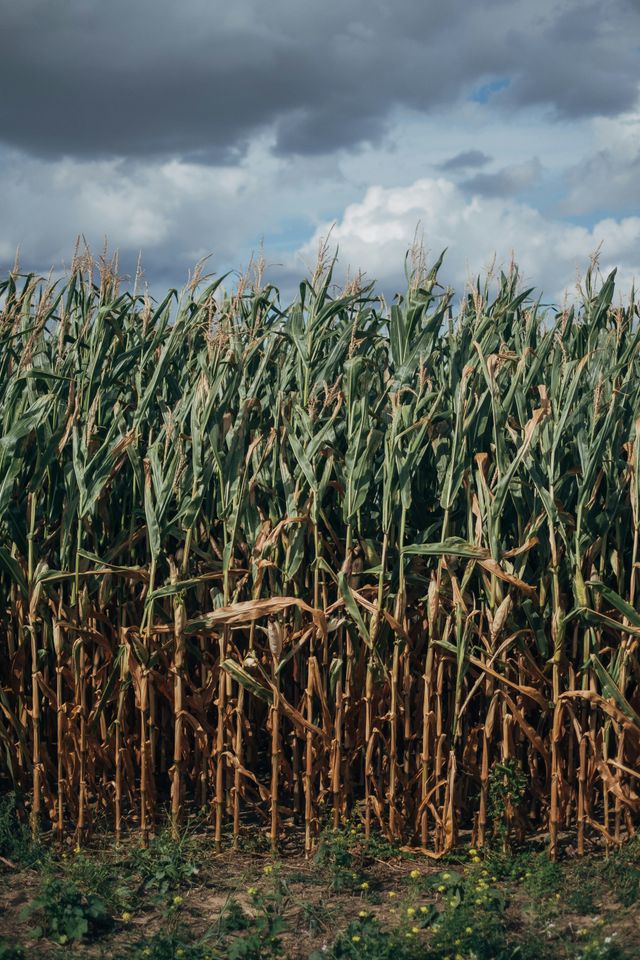
Drive north from Durban and sugar cane becomes part of the landscape almost without announcement.
Past Verulam, Tongaat and KwaDukuza, fields climb the rolling hills in long green rows. For generations they have looked permanent — almost as if they were simply another feature of KwaZulu-Natal’s geography.
They are not.
Those fields are the physical remains of an economic system that began more than 170 years ago and went on to influence migration, wages, settlement patterns, transport infrastructure, corporate South Africa and even the way the country eats and drinks.
Few agricultural commodities have left such a large imprint on one South African province.
And today, the economic model that created that landscape is under pressure.
South Africa still has tens of thousands of registered cane growers, 12 operating sugar mills and around 65,000 direct jobs attached to the industry. Current estimates put annual cane production at roughly 17 million tonnes, producing close to 2 million tonnes of sugar.
But the interesting question is no longer merely how much sugar South Africa can produce.
It is whether the crop that built one of the country’s great agricultural industries can now become something else.
Why sugar needed workers
Commercial sugar production in Natal dates back to the middle of the nineteenth century.
In 1851, Edmund Morewood produced sugar at Compensation, north of Durban, from cane introduced from Réunion. It was an early indication that the subtropical Natal coast was particularly well suited to the crop.
The climate was favourable.
The economics were more difficult.
Cane was labour intensive. Land had to be cleared, planted and weeded. Mature cane had to be cut and transported to a mill. Processing required machinery and capital.
And the emerging settler farming economy faced a problem: it could not obtain the large, stable labour force it wanted at the wages and under the contractual arrangements planters were offering.
Many African households still had access to land, cattle and agricultural livelihoods of their own. Plantation work therefore competed with economic alternatives outside the wage economy.
The colonial response was not to substantially improve the attractiveness of plantation labour.
It was to import workers.
In November 1860, the SS Truro arrived in Natal carrying the first major group of indentured workers from India.
It marked the beginning of a migration system that would continue for more than half a century.
Between 1860 and 1911, approximately 152,000 indentured Indians arrived in Natal. Many were brought specifically to provide labour to agriculture, and sugar became one of the system’s largest beneficiaries.
Their first-year wage was generally around 10 shillings a month, increasing gradually during the indenture period alongside prescribed food, accommodation and other provisions.
But describing the arrangement simply as a wage contract misses the important part.
Workers operated under an intensely coercive labour system. Colonial laws governed movement, absenteeism and the employer-worker relationship. Historical accounts document fines, criminal sanctions and harsh working conditions.
The economics mattered.
Sugar needed workers.
Indenture gave plantations access to a relatively predictable and tightly controlled labour supply at low cost.
That helped remove one of the largest constraints on expansion.
It would be too simple to say cheap labour alone created Natal’s sugar fortunes. Land, capital, technology, infrastructure and demand all mattered.
But inexpensive and highly controlled labour made the plantation model much easier to scale.
And the consequences would eventually extend far beyond agriculture.
How sugar changed Natal
When the first workers arrived, they were there principally because a colonial agricultural industry needed labour.
But people do not remain merely production inputs.
After completing their indenture, workers faced different choices over time: re-indenture, return to India or remain in Natal.
Many stayed.
Others arrived later as independent or so-called “passenger” Indians, including traders and merchants who were not part of the indenture system.
Communities developed around Durban and the sugar-growing belt: Verulam, Tongaat, Stanger — now KwaDukuza — and elsewhere.
Former labourers became market gardeners, artisans, traders and entrepreneurs.
What started partly as a response to a labour shortage slowly became a permanent demographic transformation.
An agricultural labour problem in the nineteenth century helped shape the population geography of twenty-first-century KwaZulu-Natal.
The cane fields and KZN’s Indian communities should not be reduced to the same story. The community developed in countless directions far beyond agriculture.
But their histories are undeniably connected.
Sugar helped set the migration in motion.
The legacy then moved far beyond sugar.
How the labour model changed
Indenture ended in 1911.
Sugar did not.
The labour model gradually changed.
African wage workers increasingly entered the industry, including workers drawn from rural Zululand and other parts of southern Africa.
Historical evidence suggests that planters repeatedly searched for whichever labour arrangements lowered production costs most effectively.
The modern sugar industry is, of course, a fundamentally different labour market.
National labour law, minimum wages, health-and-safety standards, unions and collective bargaining have replaced the legal architecture of indenture.
But the underlying economic tension never disappeared:
That creates a difficult historical contrast.
The industry grew partly in an era when labour was deliberately made inexpensive.
The modern industry has to compete while paying the economic cost of a completely different labour regime — as it should.
The old comparative advantage was never going to last forever.
From farms to mills
Cheap labour could expand farming.
But sugar could not become a major industry without another transformation: processing.
Cane is not like maize.
You cannot harvest it, put it in a silo and decide where to sell it several months later.
It needs to get to a mill.
As production expanded, small estate mills increasingly gave way to much larger centralised processing facilities.
That changed the economics of the entire coastline.
Rail lines and tramways were built to move cane. Main railway infrastructure connected growing districts with Durban. Mills became industrial anchors around which farms, transport businesses and towns developed.
And scale created corporate power.
The Hulett businesses developed from the nineteenth-century sugar economy. The Tongaat Group followed its own industrial path. Eventually the two were combined into the business known as Tongaat Hulett.
Over time, sugar changed from a landscape of farms and local mills into something closer to an agricultural-industrial system.
The farmer grew the cane.
The mill processed it.
The refinery converted it.
Retailers and food manufacturers distributed it.
And South Africans became very good at consuming it.
When South Africa started consuming more sugar
For much of the industry’s early history, export markets mattered enormously.
But the rise of domestic consumption was just as important.
As South Africa urbanised and incomes rose, sugar moved deeper into everyday food.
It sat on kitchen tables.
It entered jams, sweets, biscuits and baked goods.
Then the modern food-processing industry took off.
And sugar found perhaps its most important industrial customer of all:
the soft drink.
Coca-Cola, Sparletta and other carbonated drinks turned sugar from something consumers spooned into tea into an ingredient they could consume without thinking about it.
A few grams became a bottle.
One bottle became several a week.
The broader point matters more than the precise historical consumption peak.
The twentieth-century sugar industry was supported not just by agricultural productivity, but by a profound change in what South Africans ate and drank.
This is where agriculture and consumer economics meet.
More processed food created more demand for sugar.
More demand made mills more valuable.
Larger mills supported greater volumes.
Greater volumes reinforced the need for reliable cane supply.
The cane economy became a system.
And once that happens, changing one part of the system becomes extremely difficult.
Why the mill matters so much
That is why the modern Tongaat Hulett story matters far beyond one company.
Tongaat Hulett entered voluntary business rescue in October 2022 after years of financial distress and accounting problems.
Earlier this year, matters became considerably more serious.
Business-rescue practitioners pursued an application that could have resulted in provisional liquidation. The application was subsequently withdrawn in June, and the company continues through the restructuring process.
It would be easy to tell this as another South African corporate-governance story.
But that misses what makes Tongaat different.
Cane begins deteriorating after harvesting.
It contains a large amount of water and fibre, which makes long-distance transport expensive.
And mills need large volumes of cane nearby to justify their enormous fixed costs.
That creates an unusual relationship:
the farmer needs the mill, and the mill needs the farmer.
Neither works particularly well without the other.
A maize farmer whose nearest buyer disappears still owns maize.
A cane farmer whose nearby mill disappears may suddenly own a crop that has become uneconomic to move.
That is why government described Tongaat Hulett as systemically important to the sugar value chain when liquidation was being considered earlier this year.
This is not simply corporate rescue.
It is an example of what happens when agricultural risk, industrial risk and infrastructure risk become part of the same problem.
What the industry looks like today
Despite the pressure, South African sugar is far from dead.
The industry contains roughly 1,000 large-scale commercial growers alongside tens of thousands of small-scale producers, most concentrated in KwaZulu-Natal.
The industry's own estimates suggest hundreds of thousands of additional livelihoods are linked indirectly to the value chain through transport, contractors, suppliers, retail activity and rural household income.
The problem is not the absence of an industry.
The problem is the economics surrounding it.
How much should South Africa protect sugar?
This is where sugar becomes a fascinating public-policy problem.
Global sugar markets are volatile.
Countries support production in different ways.
Brazil has enormous scale and an ethanol industry that gives mills another outlet for cane.
India has used government support mechanisms around cane pricing and exports.
Eswatini can supply South Africa through the Southern African Customs Union without the same border duties that deep-sea imports face.
South African growers therefore argue that they are not competing in anything resembling a perfectly free global market.
Their answer is protection.
South Africa operates a variable tariff system using a Dollar-Based Reference Price.
Put simply, when the international price falls sufficiently below the reference level, import duties help bridge the gap.
And only a few weeks ago government made a significant adjustment.
Effective 28 August 2026, the reference price was increased from US$680 per tonne to US$785 per tonne.
The timing says something important.
The argument about the future of South African sugar is not historical.
It is happening now.
Industry representatives said deep-sea imports had exceeded 197,000 tonnes during the 2025/26 season by the end of February and estimated the associated revenue loss at roughly R1.5 billion.
Those figures come from the industry itself and should therefore be understood as its assessment of the economic impact.
Protection sounds relatively simple when viewed from a cane farm.
It becomes more complicated when viewed from a supermarket.
Because protecting domestic sugar producers can mean higher input costs for confectionery businesses, beverage manufacturers and food processors.
Those costs can eventually reach households.
How much should consumers pay to maintain a domestic agricultural industry?
And sugar has another complication.
Government is simultaneously trying to encourage South Africans to consume less of it.
When health policy meets farm economics
South Africa introduced the Health Promotion Levy in April 2018.
The policy was designed to tackle obesity, diabetes and other illnesses by taxing sugar-sweetened beverages according to their sugar content.
From a public-health perspective, reducing demand is the point.
And the available evidence suggests the policy changed behaviour.
Research into household purchases found that sugar bought through taxable beverages fell substantially following announcement and implementation of the levy.
Beverage companies also reformulated many products to reduce sugar content.
That can reasonably be described as a policy success.
For sugar farmers, however, success looks very different.
Less sugar in fizzy drinks means less industrial demand for sugar.
This exposes one of the strangest contradictions in the industry.
Government policy is simultaneously trying to:
protect domestic sugar production
while also
reducing domestic sugar consumption.
Neither objective is irrational.
But they pull in opposite directions.
The sugar industry attributes significant demand losses and employment pressure to the levy.
Public-health researchers, meanwhile, point to lower sugar purchases and product reformulation as evidence that the levy is doing what it was intended to do.
What happens when a successful health policy reduces demand for an agricultural commodity on which entire rural economies depend?
Perhaps the answer is not to convince South Africans to consume ever more sugar.
Perhaps it is to find more valuable things to make from cane.
Looking beyond sugar
That idea can sound futuristic.
It isn't.
Drive south instead of north from Durban and you can already find part of the answer.
At Sezela, Illovo operates a sophisticated downstream operation that takes material left after sugar processing and turns it into products such as furfural and furfuryl alcohol.
These are industrial chemicals used in applications ranging from foundry resins and solvents to agricultural and pharmaceutical products.
Illovo also produces alcohol and other downstream products in South Africa and exports cane-derived products internationally.
That changes how we should think about a field of cane.
A cane stalk contains sugar.
But it also contains fibre, biomass and chemical feedstocks.
Bagasse — the fibrous material left after crushing — can be burned to produce steam and electricity.
Molasses can be fermented.
Cane-derived ethanol can become fuel or a chemical feedstock.
Other pathways potentially lead into bioplastics, industrial chemicals and, eventually, low-carbon aviation fuels.
The distinction is important.
Policy is moving in the same direction
In April this year, South Africa signed Phase Two of the Sugarcane Value Chain Master Plan to 2030.
One of its stated priorities is explicitly to transition from a sugar-based industry to a sugarcane-based industry.
That wording matters.
For decades, sugar cane existed largely to manufacture sugar.
The new proposition is that sugar becomes only one possible output.
Government has identified areas such as biofuels, energy generation and wider agro-industrial development as possible parts of the sector’s future.
Other sugar-producing economies provide examples.
| Country | Diversification model | Why it matters |
|---|---|---|
| Brazil | Sugar and ethanol flex-mills | Mills can change their production mix depending on market economics. |
| Mauritius | Bagasse cogeneration | Sugar processing also contributes electricity to the national system. |
| India | Expanded ethanol blending | Surplus sugar and cane can be redirected into fuel markets. |
| South Africa | Furfural, alcohol and industrial by-products | Parts of the diversified model already exist, particularly at Sezela. |
South Africa already has fragments of the same model.
But moving from fragments to an industry-wide bioeconomy will not be easy.
The economics still have to work
There is a temptation to end stories like this with the word bioeconomy and assume technology solves everything.
It doesn't.
A modern biorefinery costs enormous amounts of capital.
Investors need confidence that enough cane will arrive every season.
KZN remains heavily dependent on rain-fed production, which means drought and climate volatility matter.
An ethanol industry needs fuel rules and pricing arrangements.
Large-scale electricity generation requires grid access, viable tariffs and long-term contracts.
Sustainable aviation fuel requires another level of processing, certification and capital.
And some alternative uses face competition from technologies that may simply be cheaper.
Bagasse power, for example, does not automatically beat South Africa’s increasingly competitive wind and solar projects simply because the feedstock is renewable.
The commercial case has to work.
That is an important distinction.
Sezela matters because it proves that this can be more than a presentation.
Scaling the concept across the industry is another question entirely.
What the next model could look like
There is a useful way to think about what happened over the past 170 years.
The original economic model looked something like this:
It created farms.
It attracted capital.
It encouraged rail and port infrastructure.
It created milling towns.
It helped produce large industrial companies.
It drew labour across an ocean.
And over generations it became embedded in KZN’s geography.
That model cannot simply be recreated.
Nor should it be.
The labour system that helped make early sugar profitable belonged to a colonial economy built on deeply unequal bargaining power.
Mass growth in sugar consumption now collides with legitimate public-health concerns.
Import protection has limits.
And relying on a handful of enormous mills creates concentration risk that Tongaat’s troubles have made impossible to ignore.
The next model therefore has to be different.
Sugar remains part of the system.
Just no longer necessarily the reason the whole system exists.
More than fields
Drive through the KZN cane belt again and the landscape looks different once you know the history.
Those green hills are not simply agricultural land.
They contain the remnants of decisions made in another century.
A demand for labour helped bring tens of thousands of people from India to Natal.
Those communities helped reshape the province.
A need to move cane helped justify transport networks and centralised mills.
Those mills helped create industrial companies.
South Africa’s growing appetite for processed food and fizzy drinks helped sustain demand.
And entire rural economies formed around the assumption that cane would continue flowing from farm to mill.
For more than 170 years, that assumption largely held.
Now the industry faces a different kind of transition.
The question is not whether cane still matters to KwaZulu-Natal.
The numbers, jobs, farms and mills make clear that it does.
The more interesting question is what the cane is ultimately for.
The crop that helped build the KZN coast may yet survive for another century. But its future may have surprisingly little to do with a spoonful of sugar.
Sources & research notes
- South African Sugar Association (SASA) — Industry facts, production statistics, grower numbers and sugar-industry structure.
- South African History Online — Indian indentured labour in Natal, 1860–1911; early sugar cultivation and colonial labour history.
- Department of Trade, Industry and Competition — Sugarcane Value Chain Master Plan Phase Two; Tongaat Hulett interventions and sugar-sector policy.
- South African Revenue Service — August 2026 customs tariff amendments and Health Promotion Levy framework.
- ITAC — Dollar-Based Reference Price and sugar tariff policy.
- Tongaat Hulett — Business rescue documents, company history and 2026 restructuring communications.
- Illovo Sugar South Africa — Sezela downstream products, furfural, alcohol and other cane-derived industrial products.
- USDA Foreign Agricultural Service — South Africa Sugar Annual 2026 and supporting production and trade statistics.
- National Treasury / SARS — Health Promotion Levy policy design and economic assessments.
- Peer-reviewed public-health research — Evidence on beverage reformulation and household sugar purchases following implementation of the Health Promotion Levy.